আরো আরো, প্রভু, আরো আরো
Aro aro prabhu
Puja
২২৮

             আরো  আরো, প্রভু, আরো  আরো

               এমনি  ক’রে আমায়  মারো॥

               লুকিয়ে  থাকি, আমি  পালিয়ে বেড়াই–

               ধরা  পড়ে গেছি, আর  কি এড়াই!

               যা-কিছু  আছে সব কাড়ো  কাড়ো॥

               এবার  যা করবার তা  সারো সারো,

               আমি  হারি কিম্বা  তুমিই হারো।

               হাটে  ঘাটে বাটে করি  মেলা,

               কেবল  হেসে খেলে  গেছে বেলা–

               দেখি  কেমনে  কাঁদাতে  পারো॥
Transliteration
Aaro aaro, probhu, aaro aaro.
Emni kore aamay maaro.
Lukiye thaaki, aami paaliye berai -
Dhara pore gechhi, aar ki eraai !
Ja-kichhu aachhe sab kaaro kaaro.
Ebaar jaa korbaar ta saaro saaro,
Aami haari kimba tumi-i haaro !
Haate ghaate baate kori mela,
Kebol hese khele gechhe bela -
Dekhi kemone knaadate paaro.
My note
Personal notes aren't included in your plan.Become a member →
That needs a higher plan — upgrade for more monthly plays and exports, sing-along editions, and full scale, instrument, taal and tempo controls. Compare plans → Sign in with Patreon
On YouTube
- Parjaay
- Puja · 228(পূজা)
- Upo-parjaay
- Dukkha(দুক্খ)
- Raag
- Desh-Baul(দেশ-বাউল)
- Taal
- Khemta(খেমটা)
- Tradition
- Hindustani(হিন্দুস্তানি)
- Collection
- Prayashchitta(প্রায়শ্চিত্ত)
- Swarabitan vol.
- 9(স্বরবিতান ৯)
- Notation by
- Surendranath Bandopadhyay
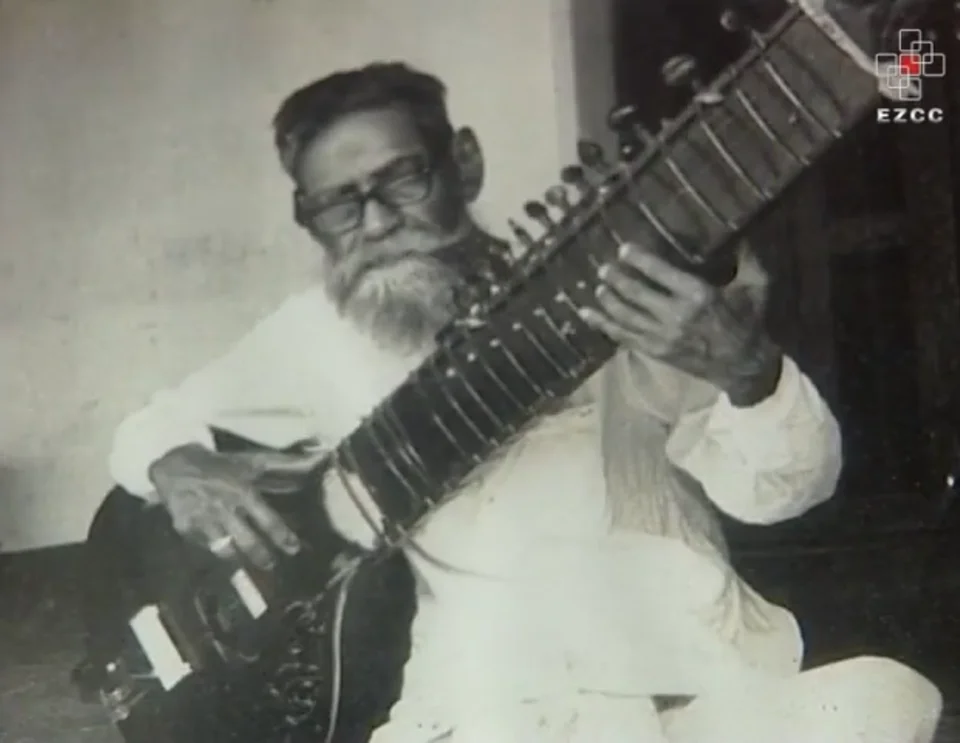 Surendranath Bandopadhyay1886–1972Musician of the Vishnupur gharana, known as Sangitratnakar, and a notator of Rabindrasangeet.Eastern Zonal Cultural Centre, from the documentary “The Vishnupur Gharana” · Wikimedia Commons, CC BY 3.0 / Dinendranath Tagore
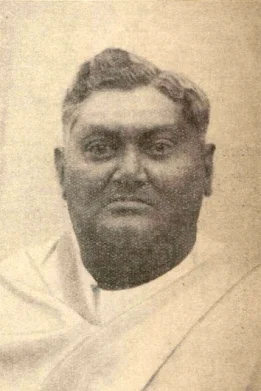 Dinendranath Tagore1882–1935Rabindranath's grand-nephew and the principal notator of his songs — the poet called him the keeper of all his songs. Taught music at Santiniketan.Photographer unknown, c. 1935 · Wikimedia Commons, public domain / Surendranath BandopadhyaySurendranath Bandopadhyay1886–1972Musician of the Vishnupur gharana, known as Sangitratnakar, and a notator of Rabindrasangeet.Eastern Zonal Cultural Centre, from the documentary “The Vishnupur Gharana” · Wikimedia Commons, CC BY 3.0
 - Composition date
- 1909(১৩১৬)
English
I hid myself to evade you.
Now that I am caught at last, strike me, see if I flinch.
Finish the game for good.
If you win in the end, strip me of all that I have.
I have had my laughter and songs in wayside booths and stately halls,- now that you have come into my life, make me weep, see if you can break my heart.
Translated by Rabindranath Tagore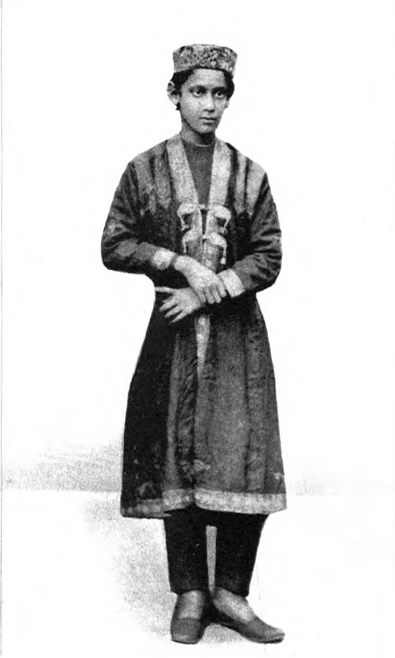 Rabindranath Tagore1861–1941Poet, composer and painter; the words and the melodies of every song in Gitabitan are his. Nobel laureate in Literature, 1913.His first photograph, Calcutta · 1873 ? · 25 Portraits of Rabindranath Tagore (Visva-Bharati, Calcutta, 1951)
AI translations
Machine-generated — may miss poetic nuance. Human translations above are authoritative.
Languages
Premium languages
AI-generated
Generating translation…
Couldn't generate a translation right now. Try again.