তোমার নয়ন আমায় বারে বারে
Tomar nayan amay
Puja
তোমার নয়ন আমায় বারে বারে   বলেছে গান গাহিবারে॥
ফুলে ফুলে তারায় তারায়
বলেছে সে কোন্ ইশারায়
দিবস-রাতির মাঝ-কিনারায়   ধূসর আলোয় অন্ধকারে।
গাই নে কেন কী কব তা,
কেন আমার আকুলতা–
ব্যথার মাঝে লুকায় কথা,   সুর যে হারাই অকূল পারে॥
যেতে যেতে গভীর স্রোতে   ডাক দিয়েছ তরী হতে।
ডাক দিয়েছ ঝড়-তুফানে
বোবা মেঘের বজ্রগানে,
ডাক দিয়েছ মরণপানে   শ্রাবণরাতের উতল ধারে।
যাই নে কেন জান না কি–
তোমার পানে মেলে আঁখি
কূলের ঘাটে বসে থাকি,   পথ কোথা পাই পারাবারে॥
Transliteration
Tomaar noyon aamay baare baare boleche gaan gaahibaare.
Phuley phuley taaray taaray
Boleche se kon isharaay
Diboso raatir maajh-kinaraay dhushor aaloy andhokaare.
Gaai ne keno ki kobo taa,
Keno aamar aakulotaa-
Byathar maajhe lukaay katha, sur je haarai akul paare.
Jete jete gobhir srote daak diyechho tori hote.
Daak diyechho jhor tuphane
Boba megher bajrogaane,
Daak diyecho moronpaane shrabon raater utol dhaare.
Jaai ne keno jaano na na ki-
Tomaar paane mele aankhi
Kuler ghaate bole thaaki,poth kotha paai paarabaare.
My note
Personal notes aren't included in your plan.Become a member →
That needs a higher plan — upgrade for more monthly plays and exports, sing-along editions, and full scale, instrument, taal and tempo controls. Compare plans → Sign in with Patreon
On YouTube
- Parjaay
- Puja · 8(পূজা)
- Upo-parjaay
- Gaan(গান)
- Raag
- Tilak Kamod(তিলক-কামোদ)
- Taal
- Dadra(দাদরা)
- Tradition
- Hindustani(হিন্দুস্তানি)
- Place
- Shantiniketan(শান্তিনিকেতন)
- Swarabitan vol.
- 43(স্বরবিতান ৪৩)
- Notation by
- Dinendranath Tagore
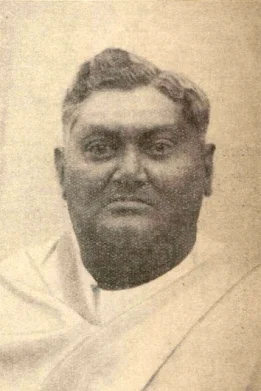 Dinendranath Tagore1882–1935Rabindranath's grand-nephew and the principal notator of his songs — the poet called him the keeper of all his songs. Taught music at Santiniketan.Photographer unknown, c. 1935 · Wikimedia Commons, public domain
 - Composition date
- September 1915(আশ্বিন ১৩২২)
English
It has fallen upon me, the service of thy singer.
In my songs i have voiced thy spring flowers, and given rhythm to thy rustling leaves.
I have sung into the hush of thy night and peace of thy morning.
The thrill of the first summer rains has passed into my tunes, and the waving of the autumn harvest.
Let not my song cease at last, my master, when thou breakest my heart to come into my house, but let it burst into thy welcome.
Translated by Rabindranath Tagore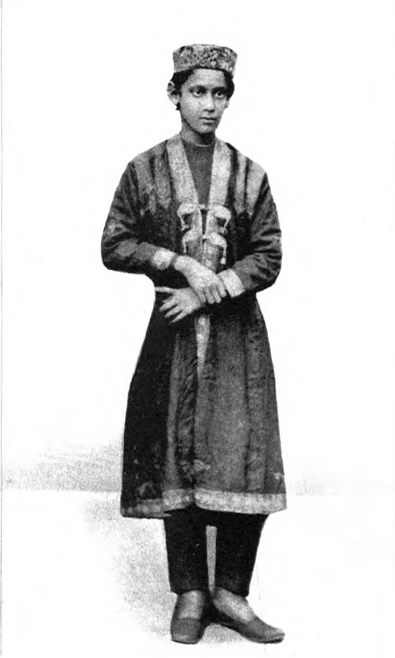 Rabindranath Tagore1861–1941Poet, composer and painter; the words and the melodies of every song in Gitabitan are his. Nobel laureate in Literature, 1913.His first photograph, Calcutta · 1873 ? · 25 Portraits of Rabindranath Tagore (Visva-Bharati, Calcutta, 1951)
AI translations
Machine-generated — may miss poetic nuance. Human translations above are authoritative.
Languages
Premium languages
AI-generated
Generating translation…
Couldn't generate a translation right now. Try again.