নীরব রজনী দেখো মগ্ন জোছনায় সুরান্তর
Nirabo rajani dekho
Natyageeti
নীরব
রজনী দেখো মগ্ন জোছনায়।

ধীরে ধীরে, অতি ধীরে, অতি ধীরে গাও গো॥

ঘুমঘোরময় গান বিভাবরী গায়—

রজনীর কণ্ঠ-সাথে সুকণ্ঠ মিলাও গো॥

নিশার
কুহকবলে
নীরবতাসিন্ধুতলে

মগ্ন হয়ে ঘুমাইছে বিশ্বচরাচর—

প্রশান্ত সাগরে হেন
তরঙ্গ না তুলে যেন

অধীর উচ্ছ্বাসময় সঙ্গীতের স্বর।

তটিনী কী শান্ত আছে—  ঘুমাইয়া পড়িয়াছে

বাতাসের মৃদুহস্ত-পরশে এমনি

ভুলে যদি ঘুমে ঘুমে
তটের চরণ চুমে

সে চুম্বনধ্বনি শুনে চমকে আপনি।

তাই বলি, অতি ধীরে,  অতি ধীরে গাও গো—

রজনীর কণ্ঠ-সাথে সুকণ্ঠ মিলাও গো॥
Transliteration
Nirabo rajoni dekho magno jochhonaay.
Dhire dhire, oti dhire, oti dhire gaao go.
Ghumoghormoy gaan bibhabori gaay -
Rajonir kantho-saathe sukantho milao go.
Nishar kuhakobale    nirabotasindhutale
Magno hoye ghumayichhe bishwocharachar -
Proshanto saagore heno   tarongo na tule jeno
Adhiro uchchhasomoy songiter swar.
Totini ki shaanto aachhe -  ghumaiya poriyachhe
Baataser mriduhasto-paroshe emoni
Bhule jodi ghume ghume    toter charon chume
Se chumbanodhwoni shune chamoke aaponi.
Taai boli, oti dhire,oti dhire gaao go -
Rajonir kantho-saathe sukantho milao go.
My note
Personal notes aren't included in your plan.Become a member →
That needs a higher plan — upgrade for more monthly plays and exports, sing-along editions, and full scale, instrument, taal and tempo controls. Compare plans → Sign in with Patreon
On YouTube
- Parjaay
- Natyageeti · 3(নাট্যগীতি)
- Raag
- Mishra-Behag-Purbi-Kafi(মিশ্র-বেহাগ-পূরবী-কাফি)
- Taal
- Madhyamaan(মধ্যমান)
- Tradition
- Hindustani(হিন্দুস্তানি)
- Collection
- Bhagna-hridoy(ভগ্নহৃদয়)
- Published in
- Bharati(ভারতী)
- Swarabitan vol.
- 20(স্বরবিতান ২০)
- Notation by
- Jyotirindranath Tagore
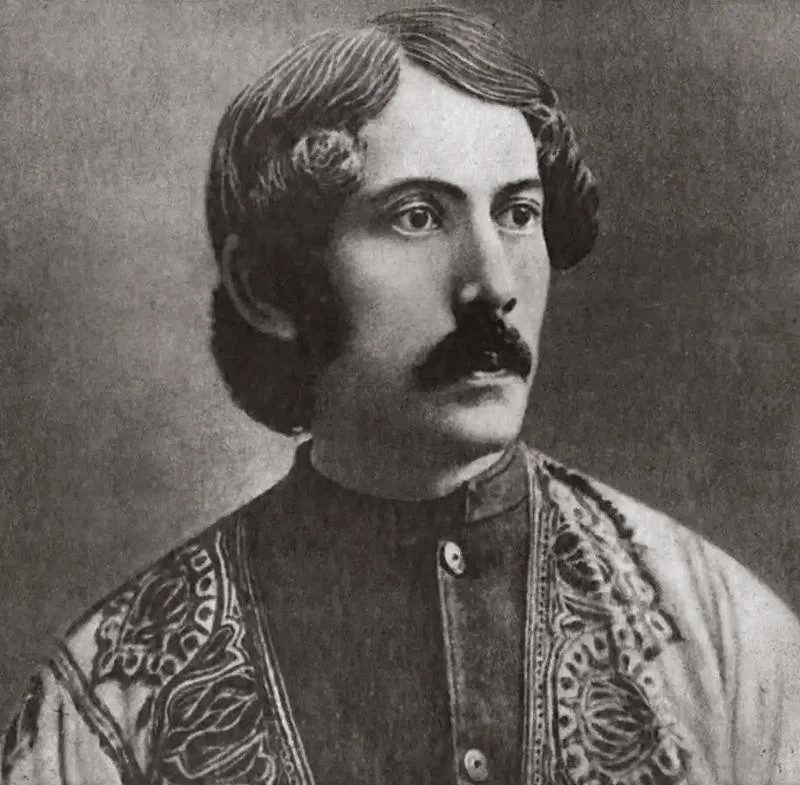 Jyotirindranath Tagore1849–1925Rabindranath's elder brother — playwright, composer and painter, a pioneer of written notation for Bengali song, and a formative presence in the young poet's life.Photographer unknown, before 1925 · Wikimedia Commons, public domain
 - Composition date
- 1878(১২৮৫)
AI translations
No translation yet — pick a language below to generate one with AI.
Languages
Premium languages
AI-generated
Generating translation…
Couldn't generate a translation right now. Try again.