ওগো সুন্দর, একদা কী জানি কোন্ পুণ্যের ফলে
Ogo sundar ekoda ki jani
Puja
ওগো সুন্দর, একদা কী জানি কোন্ পুণ্যের ফলে
আমি বনফুল তোমার মালায ছিলাম তোমার গলে ॥
তখন প্রভাতে প্রথম তরুণ আলো
ঘুম-ভাঙা চোখে ধরার লেগেছে ভালো,
বিভাসে ললিতে নবীনের বীণা বেজেছে জলে স্থলে ॥
আজি এ ক্লান্ত দিবসের অবসানে
লুপ্ত আলোয, পাখির সুপ্ত গানে,
শ্রান্তি-আবেশে যদি অবশেষে ঝরে ফুল ধরাতলে—
সন্ধ্যাবাতাসে অন্ধকারের পারে
পিছে পিছে তব উডাযে চলুক তারে,
ধুলায ধুলায দীর্ঘ জীর্ণ না হোক সে পলে পলে ॥
Transliteration
Ogo sundaro, ekoda ki jaani kon punyero phale
Aami bonophul tomaar maalay chhilaam tomaar gole.
Takhon probhate prothomo toruno aalo
Ghum-bhaanga chokhe dharaar legechhe bhaalo
Bibhaase lolite nobinero bina bejechhe jale sthale.
Aaji e klaanto dibasero abosaane
Lupto aaloy paakhiro supto gaane,
Shraanti aabeshe jodi aboshese jhare phul dhoratale -
Sondhyabaatase andhokaarero paare
Pichhe pichhe tabo uraaye choluko taare,
Dhulay dhulay dirno jirno naa hok se pale pale
My note
Personal notes aren't included in your plan.Become a member →
Interactive notation rendering is coming soon.
On YouTube
- Parjaay
- Puja · 534(পূজা)
- Upo-parjaay
- Sundar(সুন্দর)
- Raag
- Desh(দেশ)
- Taal
- Dadra(দাদরা)
- Place
- Prague(প্রাগ)
- Swarabitan vol.
- 13(স্বরবিতান ১৩)
- Notation by
- Dinendranath Tagore
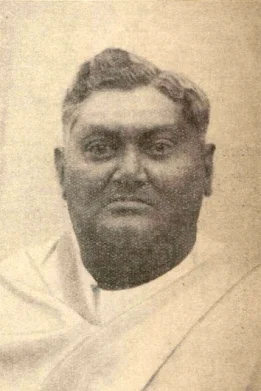 Dinendranath Tagore1882–1935Rabindranath's grand-nephew and the principal notator of his songs — the poet called him the keeper of all his songs. Taught music at Santiniketan.Photographer unknown, c. 1935 · Wikimedia Commons, public domain
 - Composition date
- 27 September 1926(১১ আশ্বিন ১৩৩৩)
English
For what great reward of my merit,
O Beautiful,
Had I, a meadow-flower, once taken my place
In the chain on thy neck?
The newly-wakened eyes of the earth
Were glad on that day,
And the lute, at the touch of the Ever-new,
Broke out in melodies of dawn.
If that flower fades and drops to the earth
At the dim hour of the day,
When the bird's songs are languid,
Let the evening wind sweep it away across the dark,
Following thy departing steps,
Never leaving it to be trodden to the dust
By the careless moments.
Translated by Rabindranath Tagore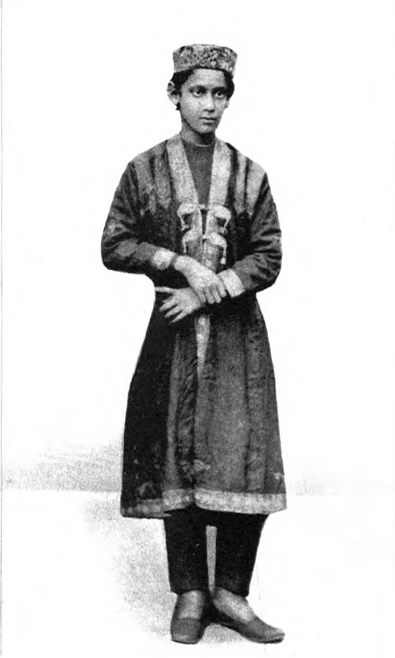 Rabindranath Tagore1861–1941Poet, composer and painter; the words and the melodies of every song in Gitabitan are his. Nobel laureate in Literature, 1913.His first photograph, Calcutta · 1873 ? · 25 Portraits of Rabindranath Tagore (Visva-Bharati, Calcutta, 1951)
AI translations
Machine-generated — may miss poetic nuance. Human translations above are authoritative.
Languages
Premium languages
AI-generated
Generating translation…
Couldn't generate a translation right now. Try again.