তোরা শুনিস নি কি শুনিস নি
Tora shunis ni ki
Puja
তোরা   শুনিস নি কি শুনিস নি তার পায়ের ধ্বনি,

               ওই যে  আসে, আসে, আসে।

             যুগে যুগে পলে পলে দিন-রজনী

               সে যে  আসে, আসে, আসে॥

       গেয়েছি গান যখন যত   আপন মনে খ্যাপার মতো

             সকল সুরে বেজেছে তার আগমনী–

               সে যে  আসে, আসে, আসে॥

             কত কালের ফাগুন-দিনে বনের পথে

               সে যে  আসে, আসে, আসে।

             কত শ্রাবণ-অন্ধকারে মেঘের রথে

               সে যে  আসে, আসে, আসে।

       দুখের পরে পরম দুখে   তারি চরণ বাজে বুকে,

             সুখে কখন বুলিয়ে সে দেয় পরশমণি।

               সে যে  আসে, আসে, আসে॥
Transliteration
Tora  shunis ni ki shunis ni taar paayer dhwoni,
Oi je  aase, aase, aase.
Juge juge pale pale dinorajoni
Se je  aase, aase, aase.
Geyechhi gaan jokhon jato  aapon-mone khyepar moto
Sakol sure bejechhe taar aagomoni.
Se je  aase, aase, aase.
Kato kaaler phaagun dine boner pathe
Se je  aase, aase, aase.
Kato shraabon andhokare megher rathe
Se je   aase, aase, aase.
Dukher pore parom dukhe  taari charon baaje buke,
Sukhe kakhon buliye se dey paroshmoni.
Se je  aase, aase, aase.
My note
Personal notes aren't included in your plan.Become a member →
That needs a higher plan — upgrade for more monthly plays and exports, sing-along editions, and full scale, instrument, taal and tempo controls. Compare plans → Sign in with Patreon
On YouTube
- Parjaay
- Puja · 130(পূজা)
- Upo-parjaay
- Biraha(বিরহ)
- Raag
- Pilu(পিলু)
- Taal
- Jot(জোত)
- Tradition
- Hindustani(হিন্দুস্তানি)
- Collection
- Geetanjali(গীতাঞ্জলি)
- Place
- Kolkata(কলকাতা)
- Swarabitan vol.
- 38(স্বরবিতান ৩৮)
- Notation by
- Surendranath Bandopadhyay
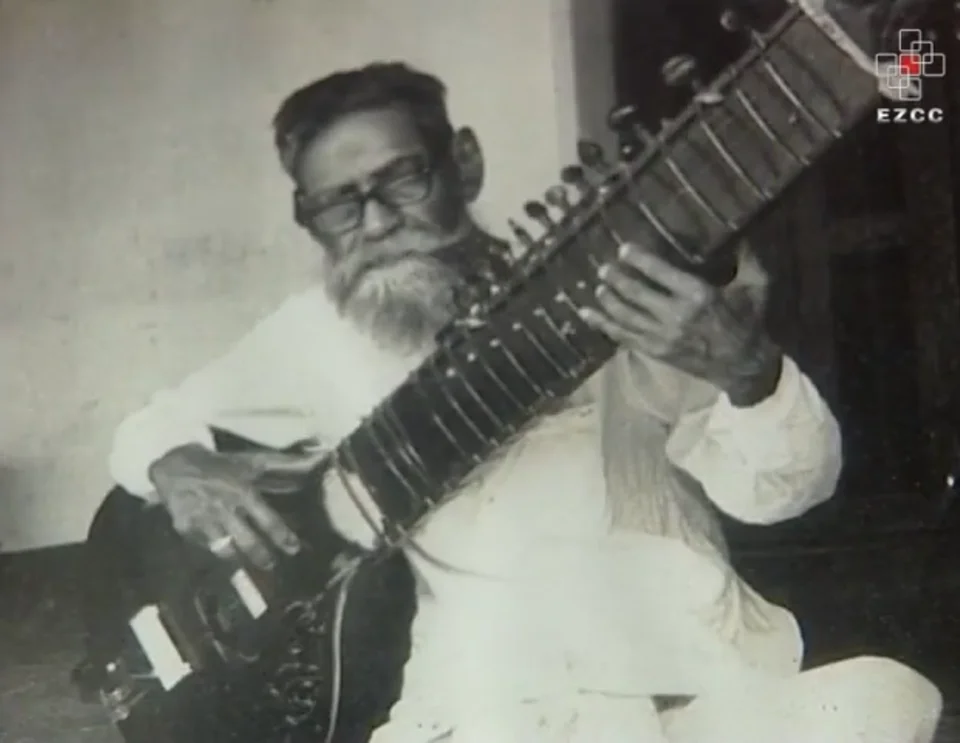 Surendranath Bandopadhyay1886–1972Musician of the Vishnupur gharana, known as Sangitratnakar, and a notator of Rabindrasangeet.Eastern Zonal Cultural Centre, from the documentary “The Vishnupur Gharana” · Wikimedia Commons, CC BY 3.0 / Bhimrao Shastri
 - Composition date
- 17 May 1910(৩ জ্যৈষ্ঠ ১৩১৭)
English
Have you not heard his silent steps? He comes, comes, ever comes.
Every moment and every age, every day and every night he comes, comes, ever comes.
Many a song have I sung in many a mood of mind, but all their notes have always proclaimed,
He comes, comes, ever comes.
In the fragrant days of sunny April through the forest path he comes, comes, ever comes.
In the rainy gloom of July nights on the thundering chariot of clouds he comes, comes, ever comes.
In sorrow after sorrow it is his steps that press upon my heart, and it is the golden touch of his feet that makes my joy to shine.
Translated by Rabindranath Tagore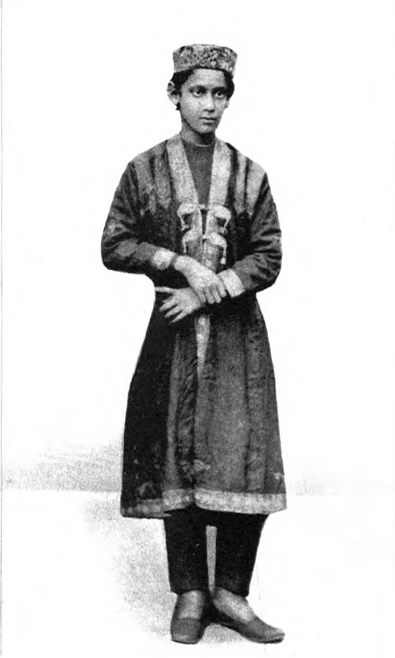 Rabindranath Tagore1861–1941Poet, composer and painter; the words and the melodies of every song in Gitabitan are his. Nobel laureate in Literature, 1913.His first photograph, Calcutta · 1873 ? · 25 Portraits of Rabindranath Tagore (Visva-Bharati, Calcutta, 1951) source
AI translations
Machine-generated — may miss poetic nuance. Human translations above are authoritative.
Languages
Premium languages
AI-generated
Generating translation…
Couldn't generate a translation right now. Try again.